
Stakeholder and Community Engagement
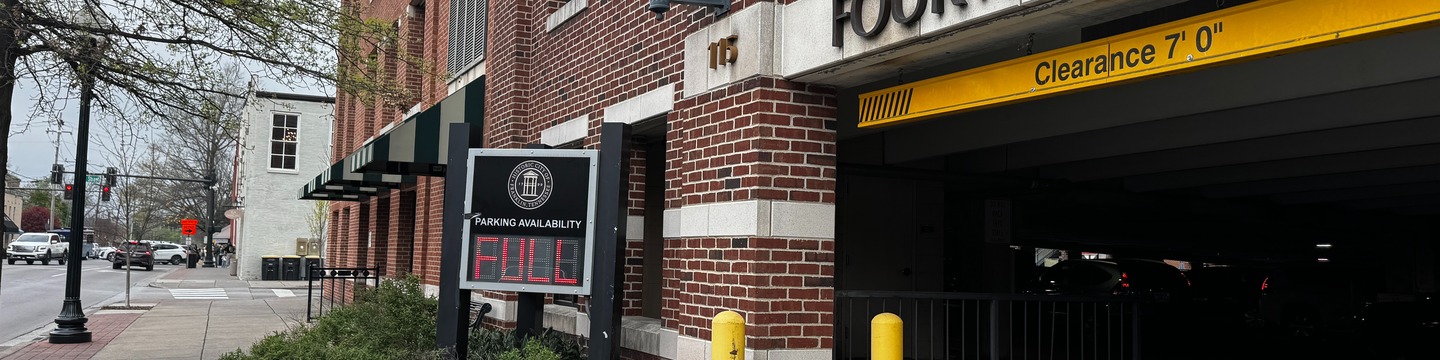
The City of Franklin is conducting a parking study to examine how parking works today and how it should work in the future.
What We’re Studying
- Daily parking availability and use
- Impacts of paid and free parking
- Parking during festivals and large events
- Parking needs along Columbia Avenue and West Main Street
Phases
Online Survey Results
Thank you Franklin community! We asked for your feedback on parking in our downtown and the public truly delivered — nearly 5,200 responses were submitted, each offering valuable insight. We sincerely thank everyone who participated; your input will be instrumental in guiding our planning efforts moving forward. The city does intend to share results of the survey in this upcoming phase.
Park Franklin 2026 Online Survey Results
The survey was conducted from June 2 to July 10, 2026, among residents, business owners, employees, and visitors in downtown Franklin.
The City of Franklin has reached a new milestone in public engagement, with 5,179 residents, visitors, employees and business owners participating in the Downtown Franklin Parking Study survey, making it the most highly participated planning engagement effort in city history.
The City of Franklin launched the Park Franklin Parking Study earlier this year to better understand parking needs and is a key component of the City's long-range plan.
The survey attracted 2,954 written comments and 3,929 map-based responses, providing one of the most comprehensive snapshots collected of how the community experiences downtown parking. The survey shows that downtown users strongly prioritize maintaining free parking, while also expressing interest in improving access, wayfinding, walkability and parking information systems. The vast majority favor free public parking, even if that means parking is sometimes harder to find.
The survey and its results will next help develop parking policies and investments over the next decade while supporting Franklin's continued growth and preserving the character of its historic downtown.
How often do you visit downtown Franklin?
Which day do you most often visit downtown Franklin?
What time do you most often visit downtown Franklin?
How long do you stay parked on a regular visit to Franklin?
Do parking time limits keep you from staying longer in downtown Franklin?
Where do you try and park first when visiting downtown Franklin? (non-special event day)
Most respondents mentioned seeking out free parking options first including employee lots, free garage time, or using codes from organizations. Several responses highlighted the use of handicap parking, with comments noting that there are too few accessible spaces available. A few respondents mentioned alternative approaches such as getting dropped off instead of parking parking at their residence or renting a space monthly. Others referenced specific locations like the Mt Hope Cemetery or short-term parking near businesses. Overall, the most common trend is a preference for free or convenient parking, with accessibility and availability of handicap spaces being a notable concern.
Using the map, drop a pin to indicate the farthest you have ever parked when visiting downtown Franklin on a regular (non-special event) day.
How often do you pay for parking in downtown Franklin?
If you pay for parking every visit or occasionally, do you think the paid lots are a good value?
Why do you typically visit downtown Franklin?
Church-related activities are the most frequently mentioned reason for visiting downtown Franklin, with many respondents specifically referencing church, church services, meetings, or Bible study. Dining and eating out are also common reasons.
Several respondents mention walking, jogging, or simply being outside as a reason for visiting. Shopping is noted, though sometimes with the comment that stores are similar or repetitive.
Other reasons include attending festivals, concerts, plays, and shows at the Franklin Theatre work and errands such as visiting the post office.
Overall, church activities and dining are the most common reasons for visiting, followed by walking/outdoor activities and shopping.
Where do you usually park when you work downtown?
Most respondents do not work downtown or did not provide a direct answer regarding downtown parking. Among those who do park downtown, the majority prefer free public parking garages, often specifically mentioning city-owned options. Some also use public parking or on-street parking when available. One respondent noted they would visit downtown more frequently for dining and theater if there were more street parking available. The overall trend is a strong preference for free parking options, especially garages, with some demand for increased street parking to support local businesses and events.
Please choose the top three parking issues that impact your business most.
The most common theme was lack of available or convenient parking. Respondents said parking is often full, customers struggle to find convenient spaces, and visitors may be unable to reach businesses at all. Several also pointed to too little free parking and concerns about parking cost.
Event and festival activity was another recurring issue, with respondents describing congestion and street crowding during busy periods.
A few responses focused on parking management rather than total supply: courthouse visitors quickly fill the 4th Street garage employees have limited options, timed parking is restrictive, and the lack of painted lines leads to inefficient use of curb space. One respondent also mentioned being ticketed for backing in and another said poor signage makes it harder for customers to know where to park.
A small number of responses said they had no issue or no comment.
Which one parking change do you think would help your business?
The most common theme across responses is a strong desire for more free parking options, especially through the addition of new parking garages. Many respondents specifically want to eliminate paid parking and reopen previously available lots.
There are also repeated requests for changes to time limits—either removing or extending them, especially for those who need to park for several hours. Some suggest resident stickers to allow longer parking for locals.
Other suggestions include designated employee parking parking passes for workers and more clearly defined delivery zones. There are also calls for better information about public transit options and, in one case, reducing parking on Main to improve safety and traffic flow.
Overall, the majority of feedback centers on increasing the availability and affordability of parking, with a particular emphasis on free and convenient options.
How much does parking affect your business/ job?
1 - No impact at all
2 - Minor impact
3 - Moderate impact
4 - Significant impact
5 - Major impact
Would you use a designated employee parking area if it preserved the more convenient parking spaces for customers/visitors?
Which street do you live on?
How does downtown parking affect your household?
How often do visitors (not residents) park on your street and walk to a destination??
How concerned are you about parking spillover into residential neighborhoods?
When do you most often encounter downtown parking spilling over into adjacent neighborhoods?
Do parking time limits keep you from staying longer in downtown Franklin?
Which statement best reflects your view of downtown public parking and price?
For reliably available and convenient on-street parking, what is the highest hourly rate you would be willing to pay for on-street parking before you would change parking habits?
If on-street parking were priced higher than the rate you just selected, what would you do?
How often do you try to park on street first, even if garages or private lots have spaces available?
Using the map to drop a pin, which specific locations is parking worse than others?
From the following list of potential improvements, which three would most positively affect your overall downtown experience?
Free parking was by far the dominant theme. Many respondents want downtown parking to remain free, oppose any expansion of paid parking, and say charging would reduce how often locals shop, dine, or make quick trips downtown. Several explicitly said they would stop coming if parking is paid.
A closely related trend was priority for locals. Many suggested free or discounted parking for Franklin/Williamson County residents, often through permits, decals, or resident passes, while charging tourists or non-residents instead. Some also wanted priority parking for downtown employees and residents/property owners.
Another very common request was simply more parking capacity, especially another free public garage or expanded garages/lots. Several said existing garages are often full during events, while others felt parking is generally fine except at peak times and special events.
Accessibility was another repeated concern. Respondents asked for more handicapped/disabled parking, especially on or near Main Street, plus stronger enforcement against misuse of accessible spaces. A few also mentioned wheelchair access, larger spaces for families, and taller/roomier garages for trucks and SUVs.
Many comments focused on management and enforcement rather than pricing: better garage signage and real-time occupancy information, clearer wayfinding, better enforcement of parking violations, illegal delivery parking, poor parking behavior, and more accurate garage space counts. Some wanted more short-term parking or longer free time limits, especially increasing 2-hour limits to 3 hours.
A smaller but noticeable group supported alternatives to driving: shuttles from remote lots, event-day shuttle service, improved transit, bike lanes, sidewalks, and safer pedestrian routes. Some went further and suggested pedestrianizing Main Street or removing some street parking to improve walkability.
Overall, respondents talked most about preserving free parking, protecting access for locals, adding more parking supply, and improving accessible parking and enforcement, with a secondary split between those wanting better traffic-free walking/biking options and those who feel the current system mostly works as-is.
Please share your thoughts about what specific changes would make your Franklin parking experience better and more convenient.
Keeping parking free was by far the dominant theme. Many said free parking is a big reason they choose downtown Franklin over Nashville and would visit, shop, and dine less—or stop going altogether—if parking became paid. Respondents repeatedly tied free parking to Franklin’s “small town charm” and to supporting local businesses rather than parking companies.
A second major theme was wanting more free parking capacity, especially more public garages/lots. Many suggested another free garage, often on the edges of downtown or near Five Points/Bicentennial/Columbia Ave, and some were fine walking farther if parking remained free. A related idea was shuttles or park-and-ride lots for festivals and busy weekends.
Many residents want locals prioritized if charging is introduced at all: resident decals/stickers, free or reduced parking for Franklin/Williamson County residents, and tourists paying instead. Some also asked for designated employee parking or off-site employee lots/shuttles so workers and government/courthouse staff do not fill prime public spaces.
Paid private lots drew strong criticism. Respondents described them as confusing, overpriced, predatory, and often underused while free areas fill up. Several cited specific bad experiences with tickets, unclear signage, multiple apps/companies, or lots behind Starbucks, Slice, Triple Crown, and other businesses. Some wanted the first 30–60 minutes free, validation from businesses, or the city to absorb/replace private paid lots.
Another common issue was time limits and enforcement. Many want longer free street parking—often 3–4 hours—so people can dine and shop without watching the clock. A few wanted stricter turnover on street spaces, but most opposed harsh enforcement or short limits for quick errands. Some specifically complained about receiving tickets just minutes over time.
Accessibility also came up often: more handicap spaces, free handicap parking, closer short-term pickup/drop-off spots, safer sidewalks, smoother walkways, and better mobility accommodations. Some elderly or disabled respondents said paid or distant parking keeps them from downtown.
Other recurring suggestions were better signage and real-time availability for garages, because many said digital space counts are inaccurate, plus more walkability, bike access, trolley/shuttle service, and better event parking plans. A smaller but notable group wanted less on-street parking or even a pedestrian-only Main Street, paired with more garage parking. A few respondents said the current system is already working well and should largely stay as is.